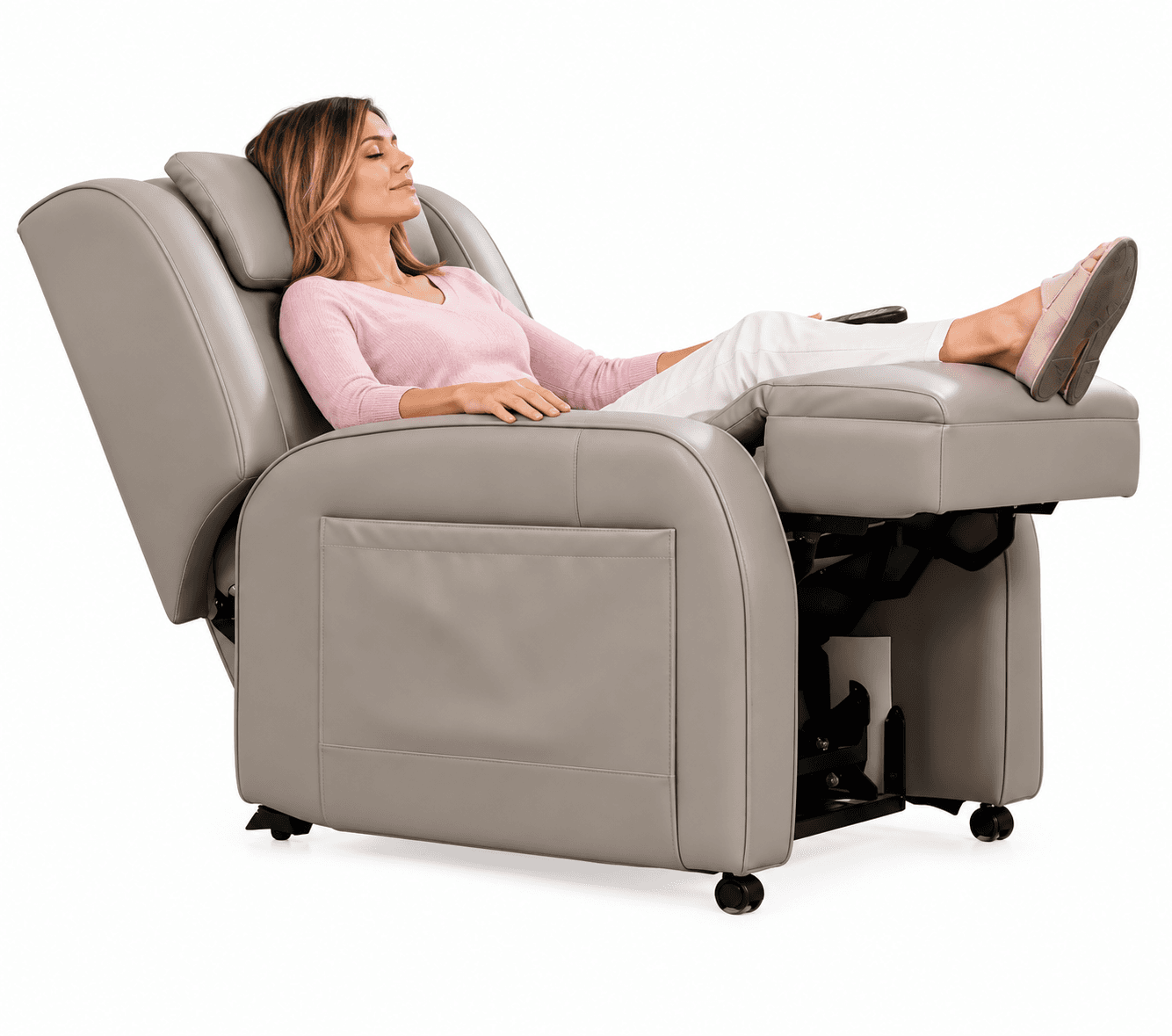
Published Friday 18 September
Why sitting causes that dull ache
If your back aches by mid-afternoon and eases once you get up and move, that's almost always about position, not damage. Staying in one posture for long stretches — especially a slouched or "turtled" forward posture at a screen — loads the same muscles and joints continuously, and they eventually complain. [1]
Before you start: this guide describes everyday, non-specific backache from sitting or desk work — not a diagnosed spinal condition. If you've been told you have a specific back condition, follow your own doctor's or physiotherapist's advice ahead of anything general here.
1. Keep moving — don't rest it
It feels counterintuitive when your back hurts, but staying as active as you reasonably can is better than bed rest. Research has found that people who rest in bed tend to take longer to recover than those who keep moving at a level they can tolerate. [2] Gentle activity — walking, light stretching — is generally recommended over stopping altogether. [2]
2. Break up sitting every 30 to 60 minutes
Most desk-related back discomfort isn't caused by sitting itself so much as sitting without interruption. Guidance from Safe Work Australia treats prolonged, unbroken sitting as the hazard to manage, not sitting in general. [3] A practical target: stand up, stretch, or walk for a minute or two roughly every 30 to 60 minutes. [1][3]
- Set a recurring reminder if you tend to lose track of time at a screen
- Standing to take a phone call or reading on your feet both count
- A short walk after lunch does double duty for posture and circulation
3. Check your chair and screen height
A supportive, firm chair with your back against it and feet flat on the floor puts far less strain on your lower back than a soft couch, which tends to round your spine forward. [1] A cushion or rolled towel in the small of your back can help maintain that support if your chair doesn't already have it. [1]
Massage pad buyer's guide — one option some people add to a chair they already have, mainly for evening comfort and relaxation rather than as a fix for the setup itself. Sorting the chair and screen height first matters more than any product.
4. Use heat for everyday stiffness
Applying heat to a stiff, achy back is a commonly recommended, low-effort way to ease general tension — a warm bath, a heat pack, or a heating function on a chair or pad. [2] It's a comfort measure, not a treatment, and works best alongside staying active rather than instead of it.
5. Mind your sleep position
Ongoing nighttime discomfort is worth paying attention to. Mild backache that doesn't disturb your sleep is usually the everyday, mechanical kind described in this guide; pain that wakes you up and doesn't ease when you change position is a different signal and worth mentioning to a doctor. [4]
When to stop managing it at home
See a doctor rather than continuing to self-manage if you notice:
- Pain that is severe, worsening, or spreading down a leg
- Numbness or weakness in one or both legs
- A change in bladder or bowel control — this combination needs prompt medical attention [4]
- Pain following a fall, accident, or other injury
- Pain accompanied by fever
None of these are things to wait out at home. [4]
Sources
- Healthdirect Australia, "How to improve your posture — posture exercises for home and work" — healthdirect.gov.au
- Mayo Clinic Press, "Back Exercises: How to Relieve Pain at Home" — mcpress.mayoclinic.org
- Safe Work Australia, "Sitting and standing" — safeworkaustralia.gov.au
- St George's University Hospitals NHS Foundation Trust, "Emergency Department Back Pain Advice" — stgeorges.nhs.uk
This guide is independent, general information — not medical advice, and not a diagnosis or treatment plan. If you have severe, spreading, or persistent back pain, or symptoms such as numbness, weakness, or a change in bladder or bowel control, see your doctor promptly rather than continuing to self-manage. HomeTrials does not endorse or receive payment from any manufacturer. © 2026 HomeTrials Pty Ltd.
Questions people ask
Is bed rest good for back pain?
No. Staying as active as you comfortably can is generally recommended over resting in bed, since people who rest tend to recover more slowly than those who keep moving gently. [2]
How often should I get up from my desk?
Most guidance suggests breaking up sitting with a short movement break roughly every 30 to 60 minutes, even if it's just standing up for a minute or two. [1][3]
When is back pain a reason to see a doctor rather than manage it at home?
See a doctor if pain is severe, spreading down a leg, comes with numbness or weakness, follows an injury, or is paired with a change in bladder or bowel control — that last combination needs urgent attention. [4]